
Wakamatsuya


Fireworks
“Joy and Delight Within Fleeting Moments”
A Japanese boxwood comb (tsuge-gushi) is a traditional everyday grooming tool, used to brush, set, and adorn the hair.
About
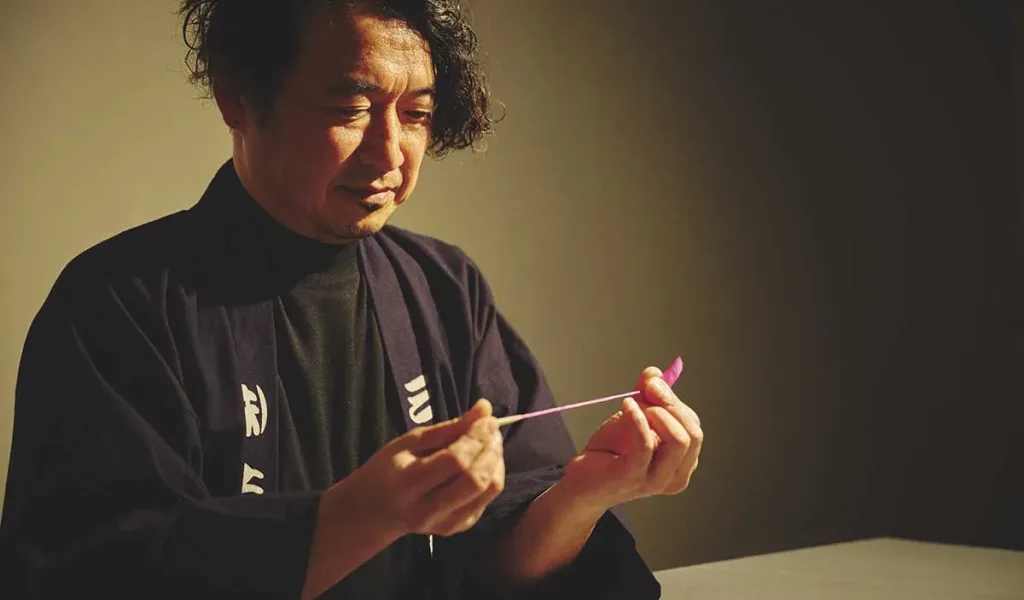
One is toy fireworks—handheld sparklers or small ground fireworks that people can easily enjoy themselves. The other is display fireworks, launched high into the night sky to bloom in large-scale festivals.
Japanese fireworks are made primarily from black powder. By blending metal components into this powder and carefully adjusting the formulation, flame reactions occur, producing a wide range of colors. That powder is then shaped, packed, and assembled entirely by hand—through a series of processes that give form to each individual firework.
Origins
There are several theories about how fireworks first appeared in Japan.
One widely told account traces the beginnings of fireworks in Japan to the early Edo period, when Tokugawa Ieyasu—the warlord known today as the “shogun” who unified the country and established the Tokugawa shogunate—is said to have seen fireworks for the first time. This was a time just after the Warring States period, when gunpowder had been used primarily for battle, and people were still exploring how it might be repurposed beyond warfare. It is said that Ieyasu gathered gunpowder artisans under his direct patronage, and that these skills gradually evolved into what would later become firework makers.
In this transition, gunpowder was transformed from a tool of conflict into something meant to be seen, shared, and enjoyed. That shift—from weapon to spectacle—can be seen as a major turning point in the history of Japanese fireworks.
Relationship with Asakusa
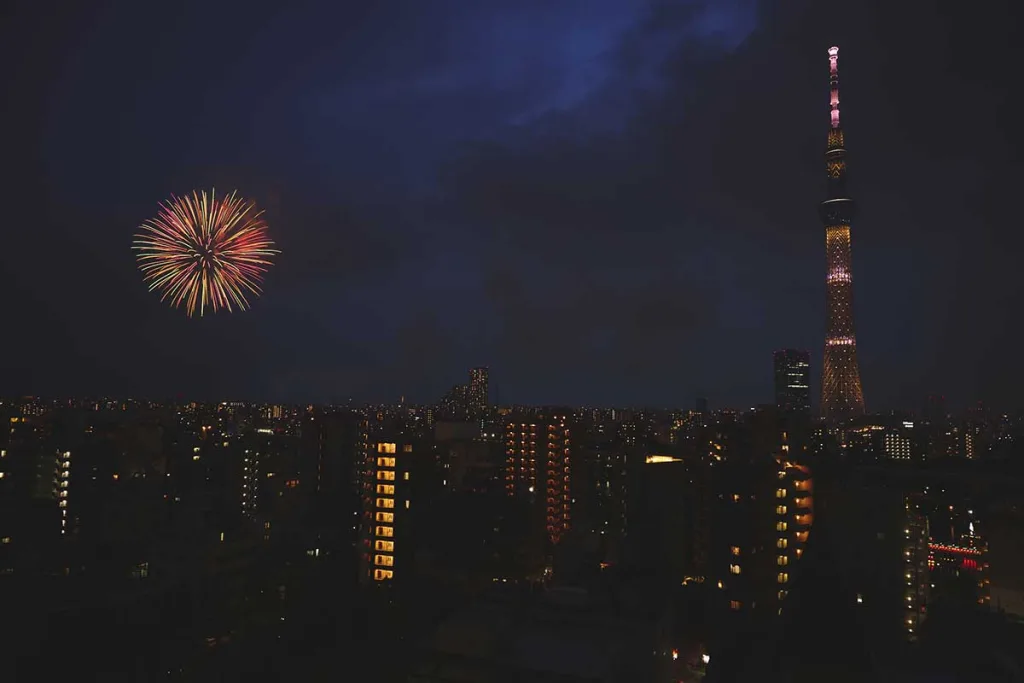
During the time of the eighth shogun, Tokugawa Yoshimune, a devastating famine struck the country, claiming many lives. It is said that fireworks were launched over the Sumida River to console the spirits of the deceased—an act of remembrance that later came to be regarded as the origin of fireworks festivals.
This area was also once known as Yanagibashi, a flourishing geisha district. When visitors began to dwindle, fireworks were deliberately set off to draw people back—something worth traveling to see. Patrons gathered on yakatabune boats, commissioning fireworks and competing to see who could present the most iki—stylish and spirited—display. On hot summer nights, townspeople gathered along the riverbanks, gazing up at the sky together. From this, the custom of yūsuzumi—evening cooling—gradually took shape.
Even today, shouts of “Tamaya—!” and “Kagiya—!” echo through the crowd. These calls originated from spectators cheering for their favored firework houses, and they remain part of the living tradition that continues in the Sumida River Fireworks Festival.
Materials
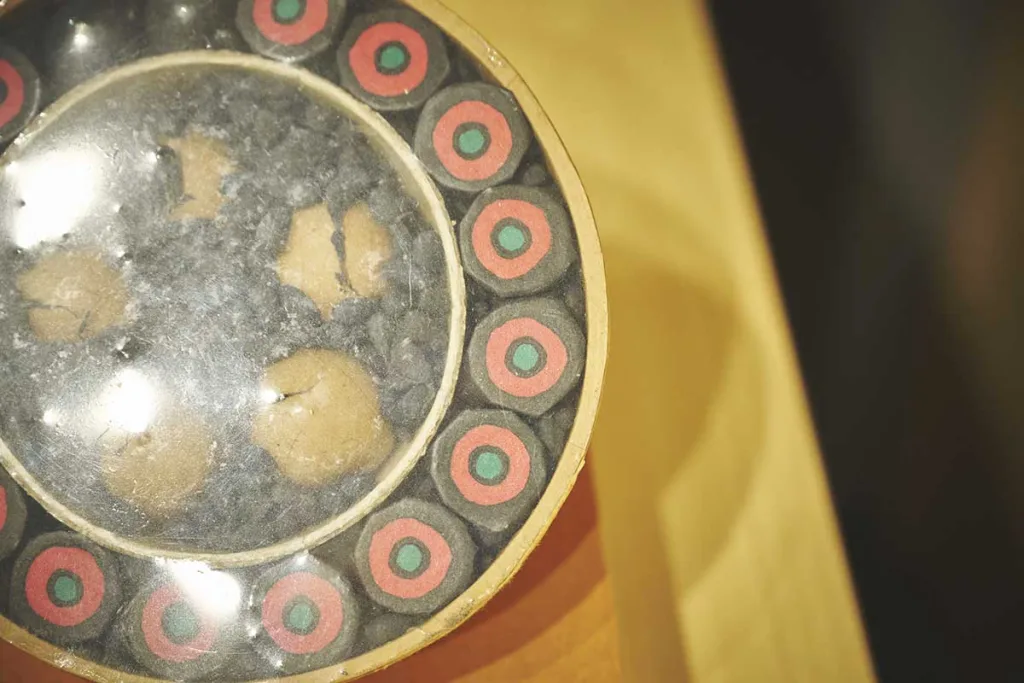
Japanese fireworks are made primarily from natural materials—paper, wood, and gunpowder. The fundamental methods of making fireworks have been passed down with care, and the materials used today continue to reflect longstanding tradition.
Of course, from the perspective of efficiency, it would be possible to introduce plastics or further mechanization. But fireworks are not something that can be mass-produced by machines. Because gunpowder is involved, safety must always come first, and many steps require human judgment, sensitivity, and restraint. For this reason, both the materials and the methods have remained rooted in tradition.
Process
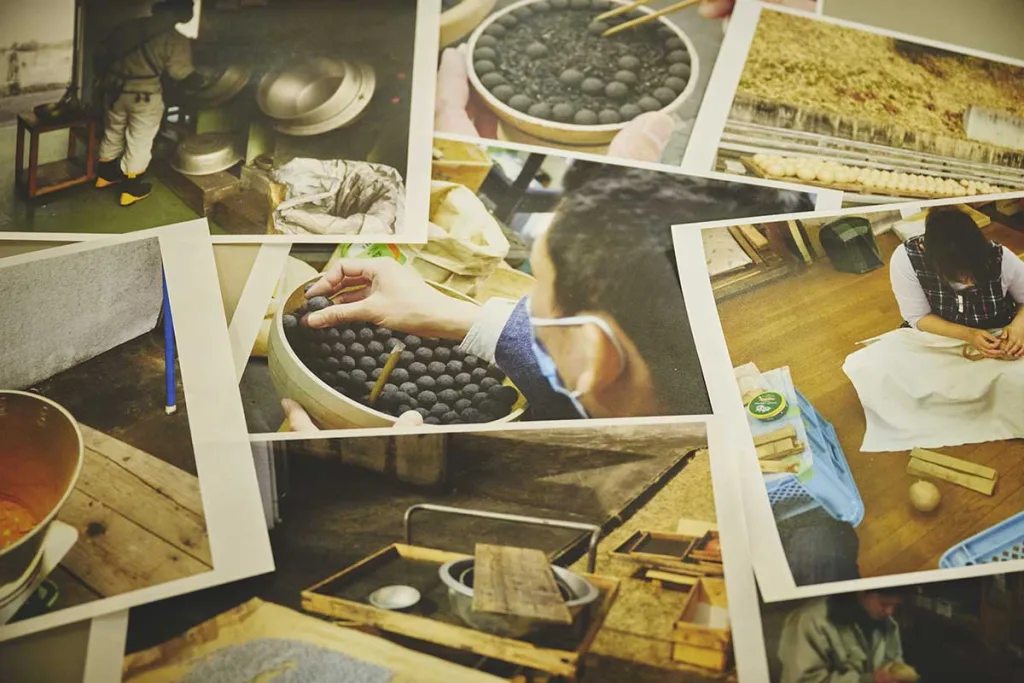
The making of display fireworks begins with formulating black powder. Ingredients that produce flame reactions are adjusted according to the desired effect.
Once the formulation is complete, the next step is creating the hoshi—literally “stars,” the small pellets inside a firework that emit light and color.
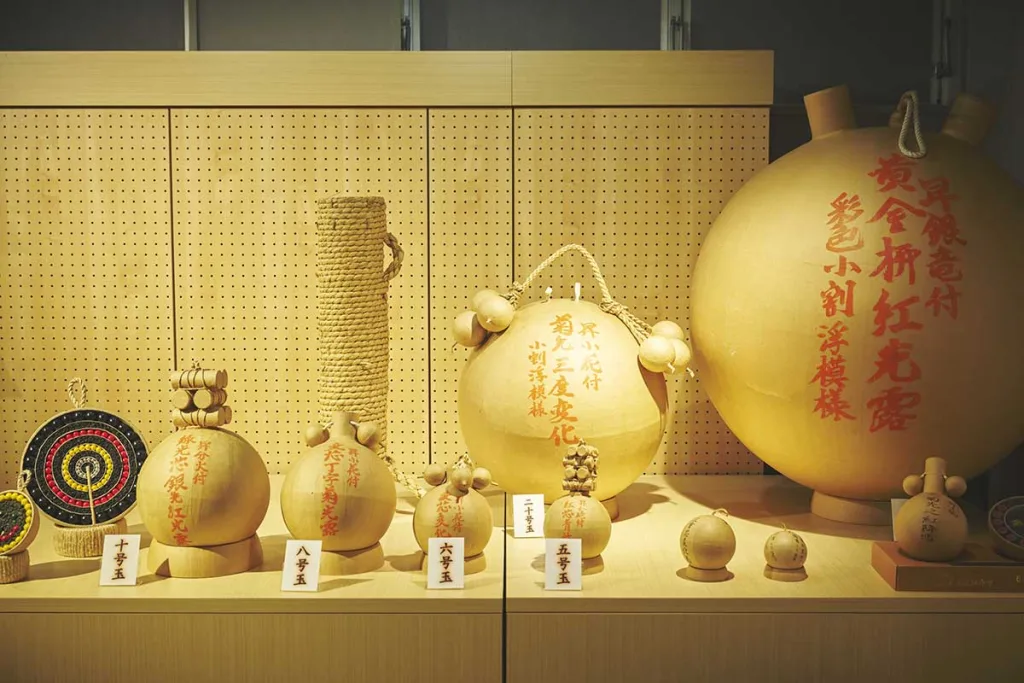
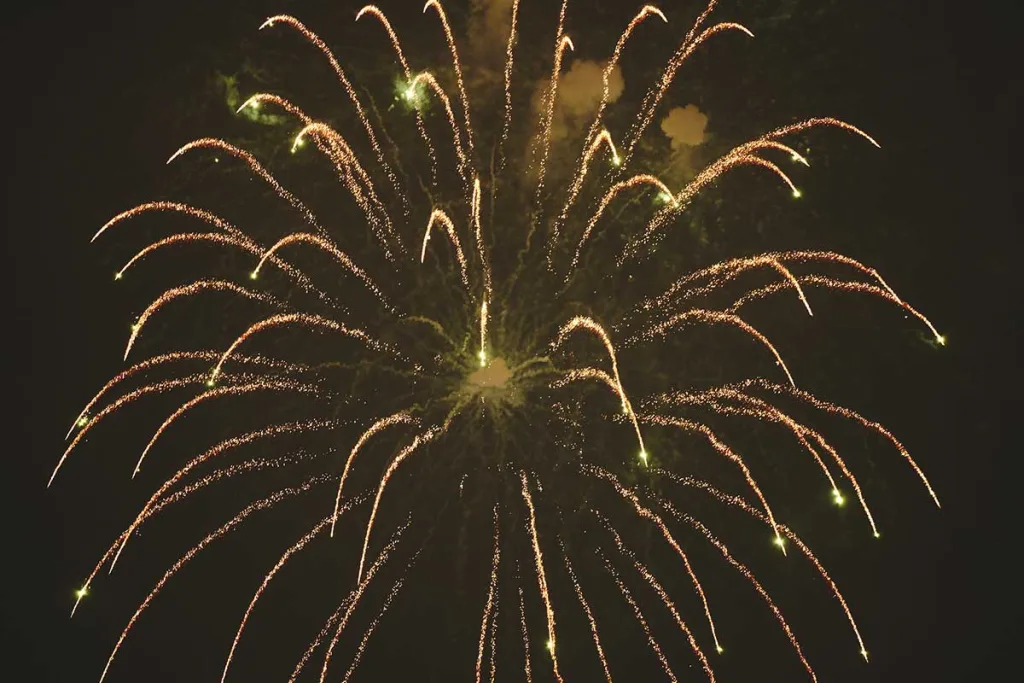
After the hoshi are prepared, they are arranged inside the shell in a process known as tamagome. The placement and properties of these pellets determine whether the firework opens in a perfect sphere, cascades like willow branches, or forms other shapes.
Once tamagome is complete, the process moves on to tamahari—literally “shell pasting.” Two hemispheres are joined together, then layered with paper and secured using natural adhesives such as rice paste and funori seaweed glue. These adhesives are carefully chosen so they do not stretch excessively. Drying and reinforcement are repeated until the firework is complete.
From formulation to completion, the process takes roughly three months. While fireworks are most often launched in summer, firework makers continue working throughout the winter—devoting time, patience, and handwork to each piece.

Design
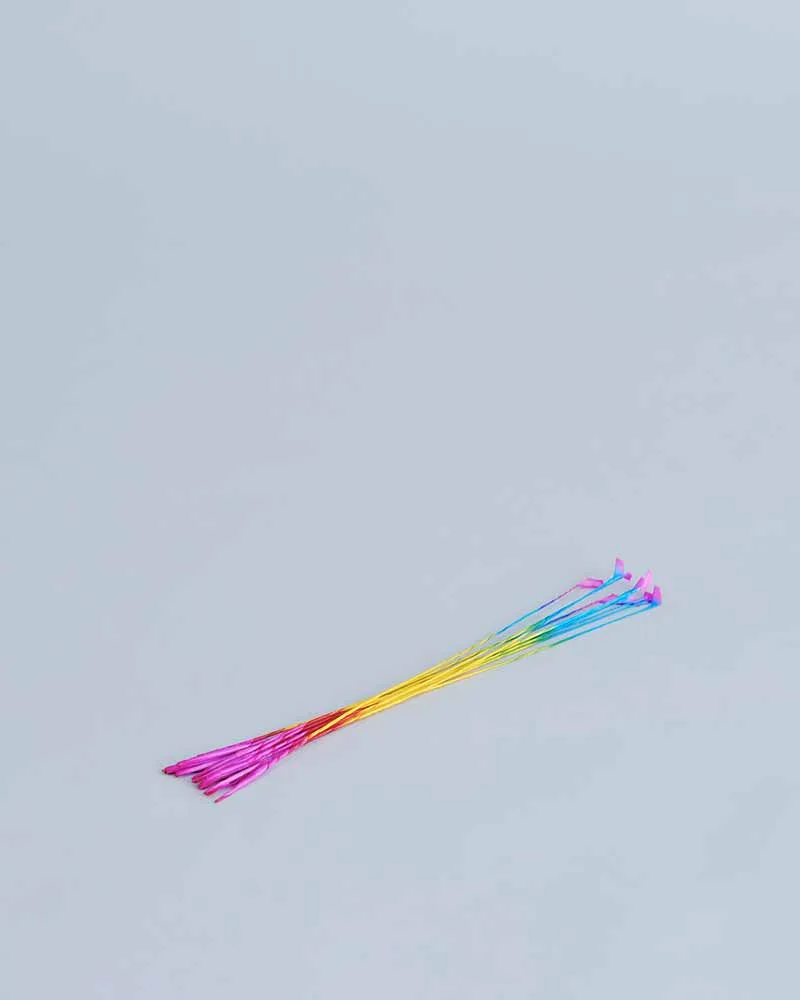
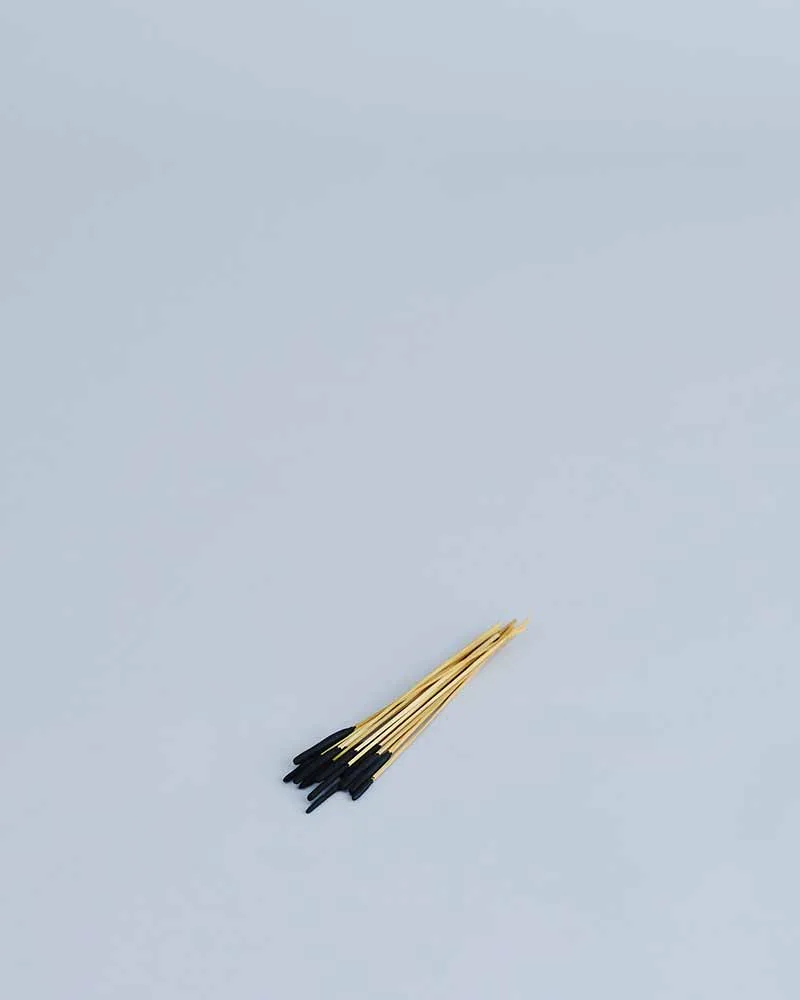
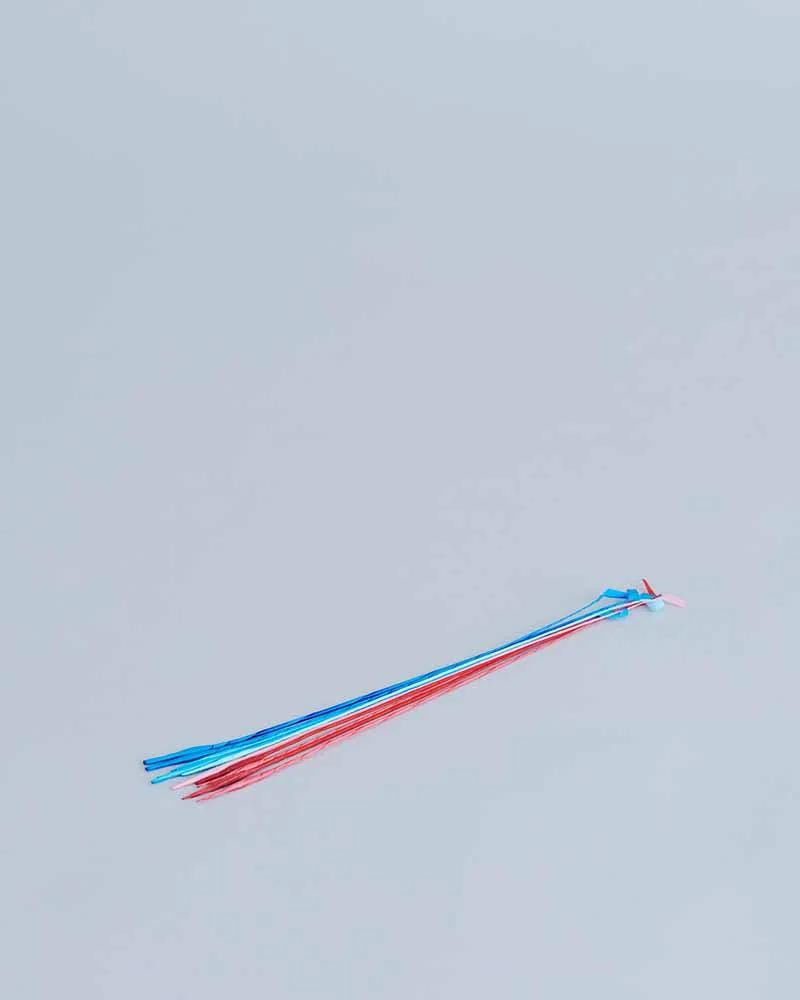
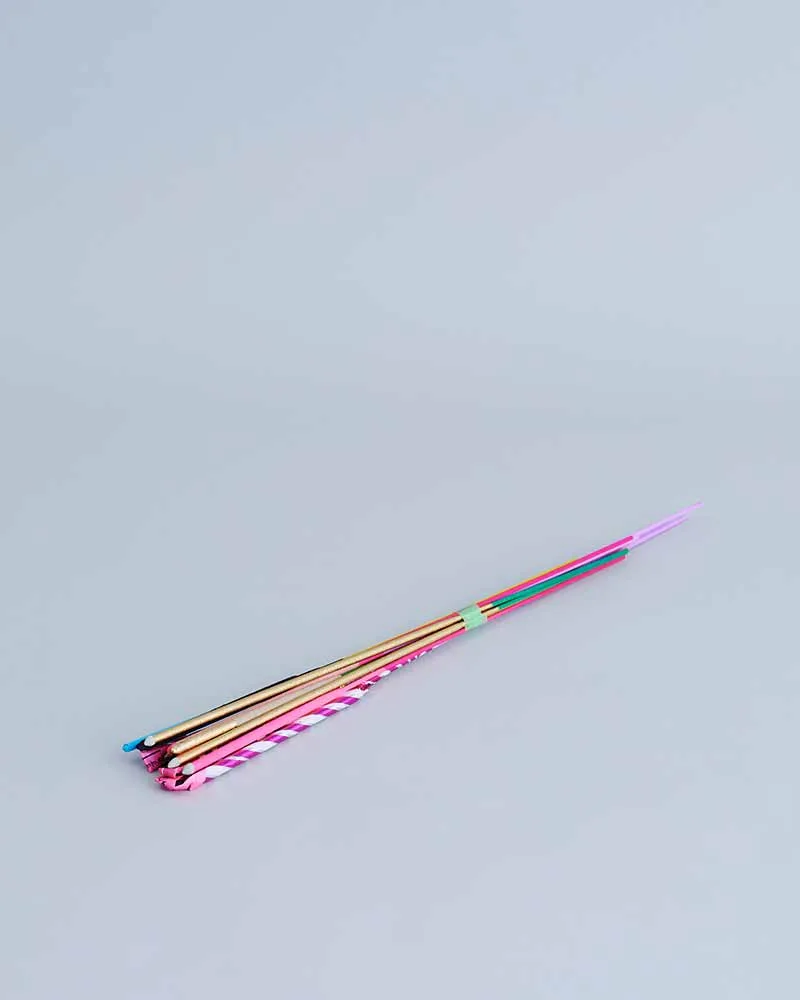
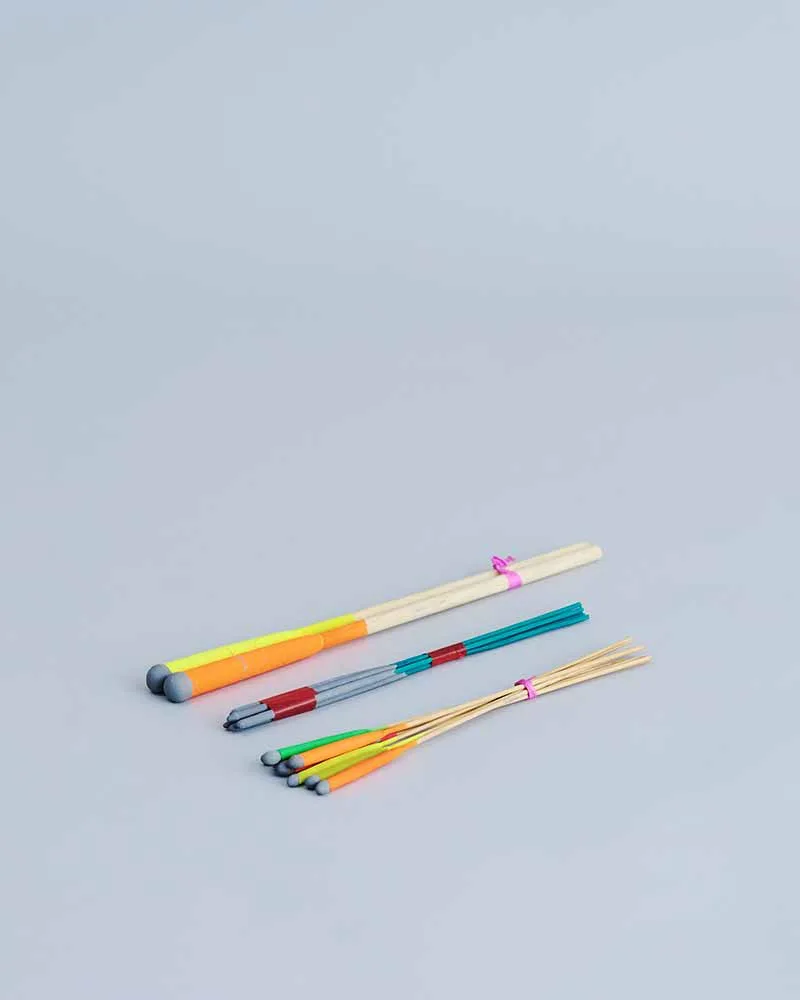
We came to realize that playing with handheld fireworks is less common outside Japan. In contrast, in Japan it has long been customary to sell assorted fireworks together in a single package—a uniquely Japanese approach.
In recent years, growing awareness of environmental issues and the restrictions brought by the COVID-19 pandemic prompted reflection within the industry. Fireworks could not be launched, and even play was subject to uncertainty. That raised a question: what could be done now?
Fireworks inevitably leave waste, and lighting them produces carbon dioxide. In that sense, they do not easily align with environmental discourse. However, fireworks have always resonated strongly with education, community, shared experience, and emotional connection. This led to a reevaluation of packaging. Although fireworks themselves do not use plastic, traditional retail packaging relied heavily on it. By reducing plastic and introducing an eco-friendly package that can be used immediately upon opening, waste was minimized. Today, these compact eco-packaged fireworks are gradually becoming the standard.
WORKS
Our values
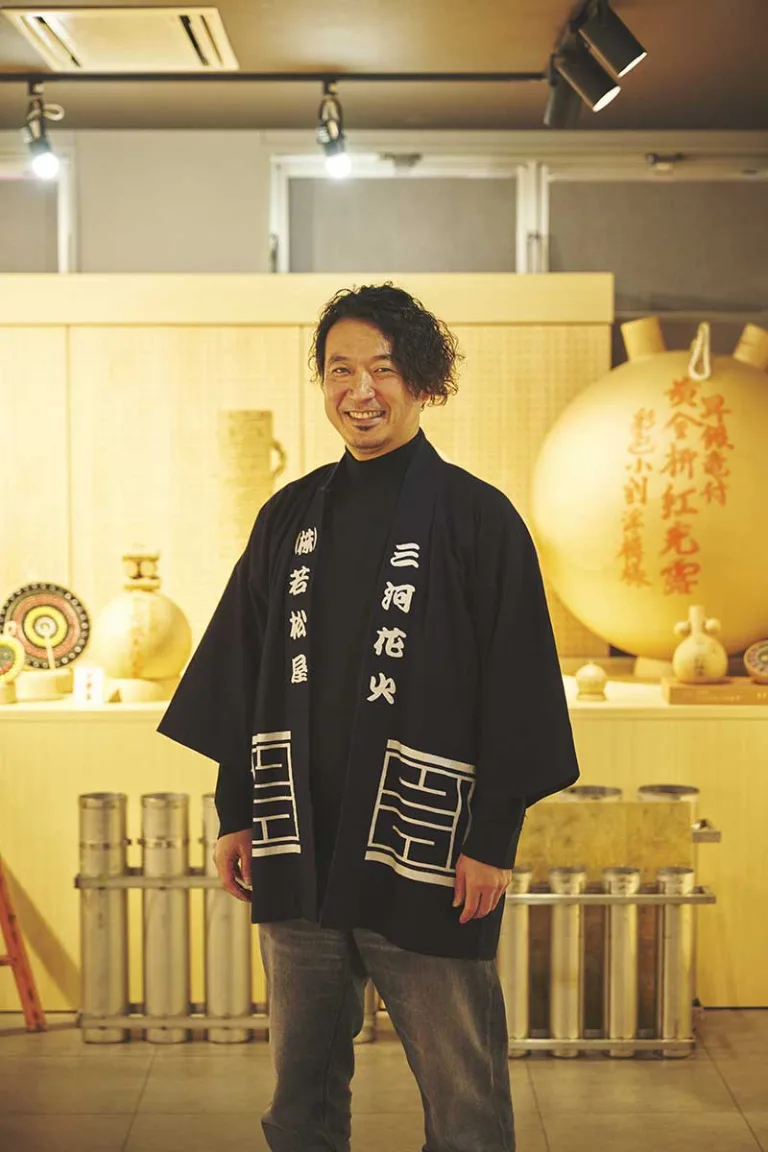
Naoki Takeuchi
Japanese fireworks have always existed for the people. When a firework is launched, everyone around it becomes part of the experience.
Fireworks rise in an instant and vanish just as quickly. No two displays are ever the same.
Within that fleeting nature lies joy and delight.
There is no single correct way to enjoy fireworks. Some watch alone, others with family or friends. While certain viewing rules exist, what one feels in that moment is entirely free. Rather than belonging to a select few, Japanese fireworks invite everyone present to look up at the same sky.
That philosophy—shared, fleeting, and open to all—lies at the heart of Japanese fireworks.